

New Biochar Methodology Offers Farmers a Low-Cost Pathway to Carbon Credits While Protecting Cultural Landscapes
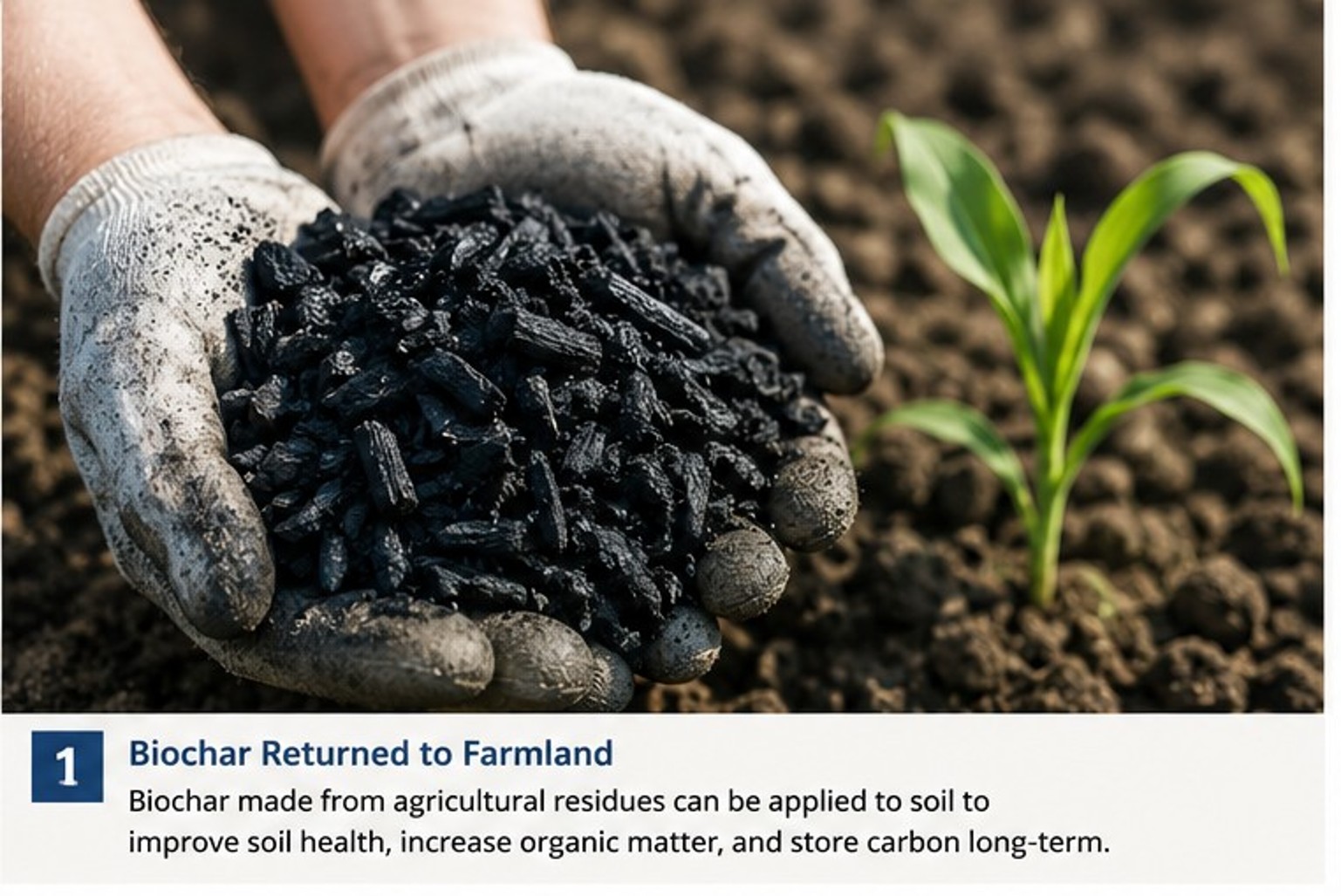
Biochar Returned to Farmland
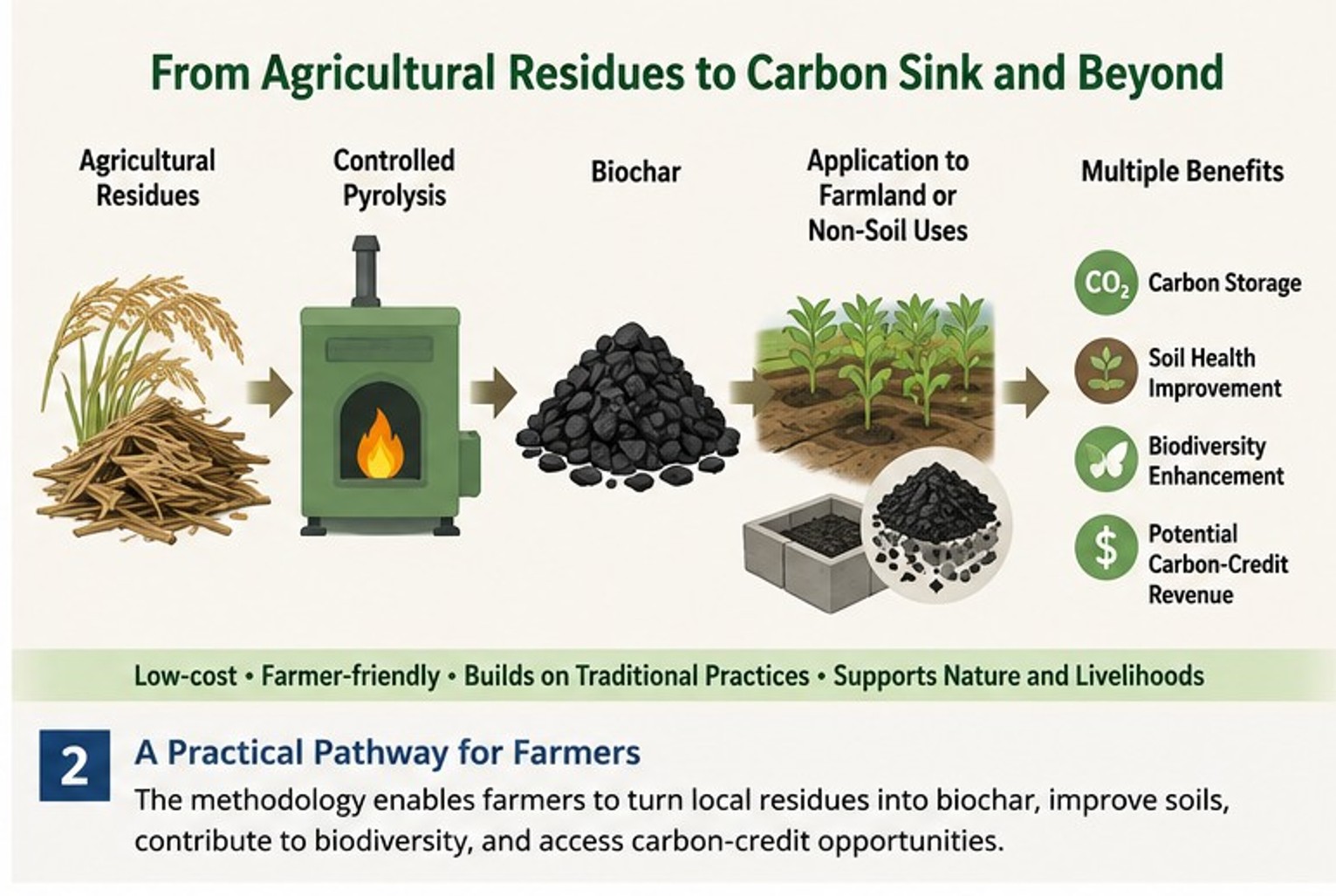
A Practical Pathway for Farmers
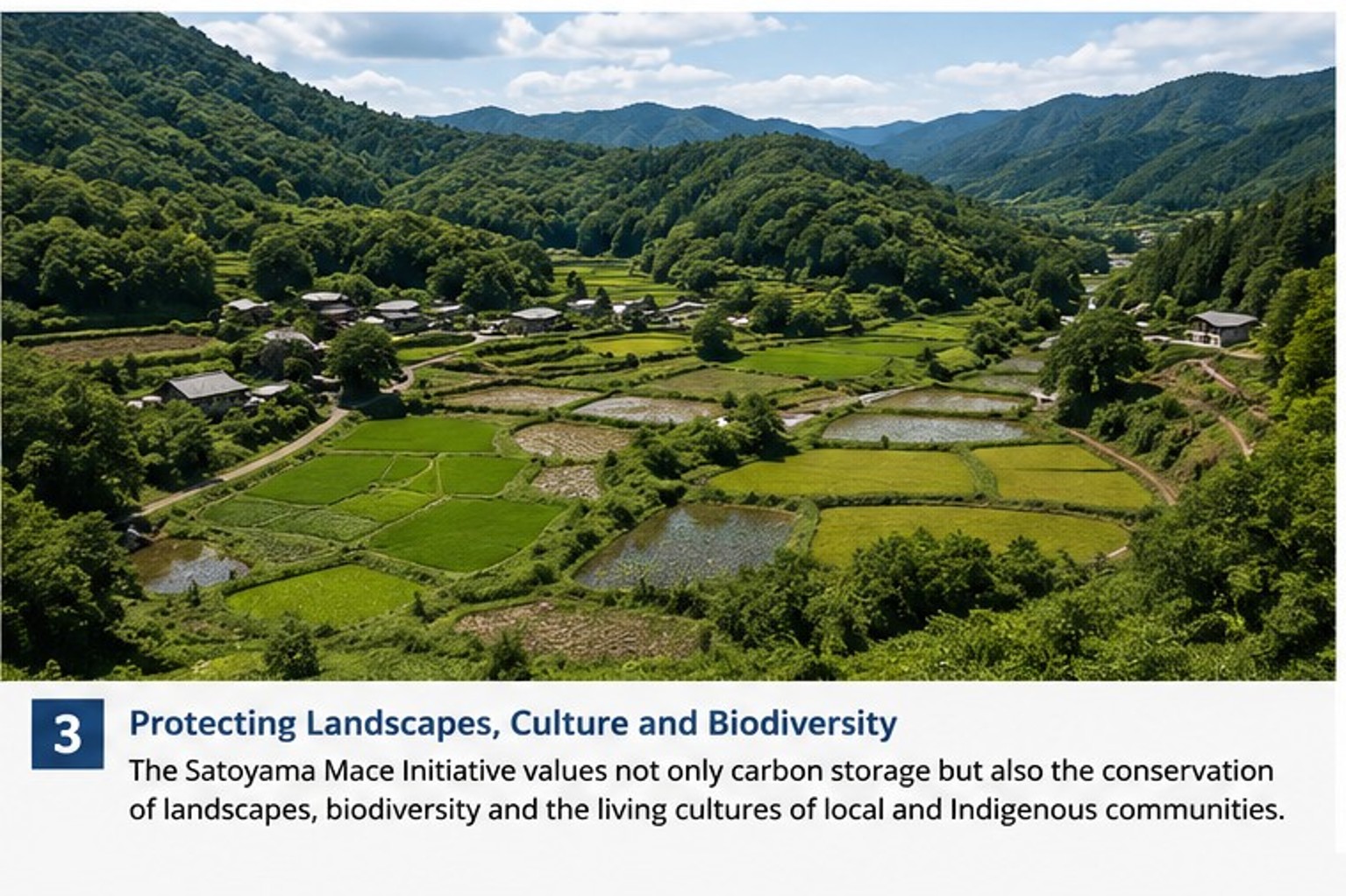
Protecting Landscapes, Culture and Biodiversity
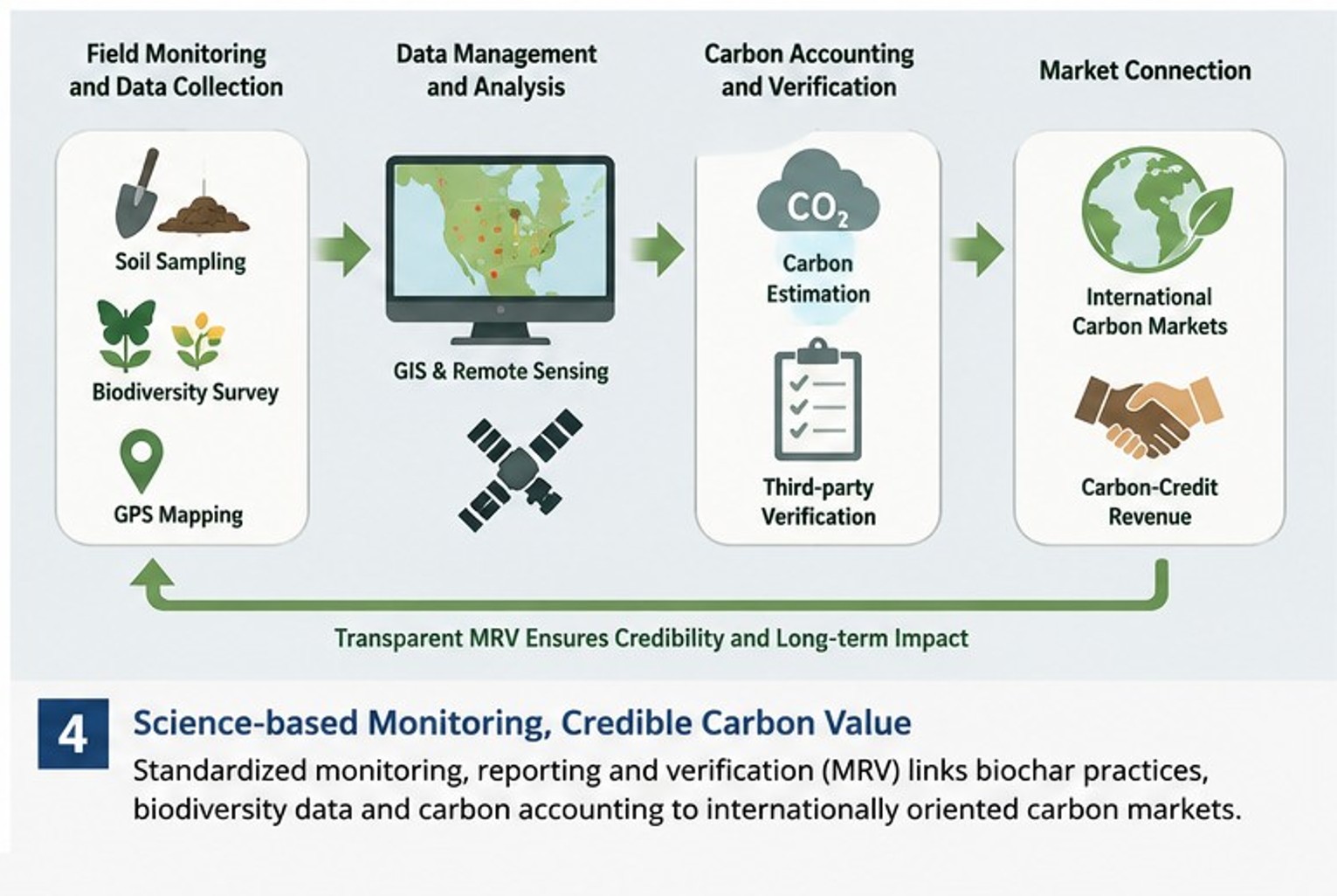
Science-based Monitoring, Credible Carbon Value
The framework enables farmers to transform agricultural waste into measurable carbon assets while supporting soil health, biodiversity and rural resilience.
TAIWAN, June 2, 2026 /EINPresswire.com/ -- A newly released biochar methodology under the KMGBF-aligned Satoyama Mace Initiative is positioning one of agriculture’s simplest circular practices as a scalable pathway for carbon storage, biodiversity protection and rural income generation.
Titled “Biodiversity Methodologies for Biochar Utilization in Soil and Non-Soil Applications,” the methodology provides a practical framework for converting agricultural residues into biochar, applying it to farmland or other durable uses, and documenting the resulting climate and biodiversity benefits through monitoring, reporting and verification. The methodology was approved on January 5, 2026 and is included in KMGBF-Aligned Carbon Mitigation Methodologies under the Satoyama Mace Initiative, a 2026 publication designed to connect carbon mitigation with biodiversity, ecosystem restoration and community-based stewardship.
The approach responds to a central challenge in climate finance: many farmers and rural communities are already managing land in ways that protect landscapes, recycle biomass and sustain local ecosystems, yet these everyday practices are often not translated into recognized carbon value. The biochar methodology is designed to close that gap by turning accessible farm-level actions into measurable environmental outcomes.
Biochar is a carbon-rich material produced when biomass residues are heated under controlled conditions. For farmers, its appeal lies in its practicality. Agricultural residues such as crop straw, pruning waste, husks or other local biomass can become a resource rather than a disposal burden. When biochar is returned to farmland, it can support soil improvement, organic-oriented farming practices, water retention, nutrient management and long-term carbon storage.
Unlike many climate technologies that require complex infrastructure or specialized expertise, biochar can be adopted with relatively simple know-how, low-cost entry equipment and locally available materials. This makes it one of the most accessible carbon sink pathways for farmers, particularly in agricultural regions where biomass residues are abundant and traditional land management practices remain deeply connected to local life.
The methodology is designed to reward stewardship without forcing farmers to abandon their way of life. Under the framework, participating farmers can continue familiar agricultural practices while adding a layer of carbon accounting, biodiversity monitoring and potential carbon-credit value. In practical terms, farm residues that might otherwise be burned, discarded or left to decay can be transformed into a soil-improving carbon asset.
“Carbon finance should not require farmers to stop being farmers,” said Professor Shu-Mei Wang of National Taiwan University, the methodology’s developer. “The value of this methodology is that it builds on what rural communities already know how to do: manage land, recycle resources, care for soil and maintain the landscapes that support their livelihoods. Biochar adds a measurable carbon sink and a possible new revenue pathway to those existing practices.”
The methodology also advances a broader interpretation of carbon value. Conventional carbon programs often focus primarily on the quantity of carbon reduced, avoided or removed. The Satoyama Mace Initiative framework expands that view by integrating carbon mitigation with biodiversity, cultural landscapes, local livelihoods and community-based land stewardship. This biodiversity-plus and landscape-plus approach may support premium positioning for carbon credits that can demonstrate verified climate benefits together with ecological and social co-benefits.
That distinction is especially important for Indigenous peoples, farmers and local communities whose land stewardship has long contributed to ecosystem health but has often remained outside formal climate finance systems. By linking biochar utilization with biodiversity monitoring and landscape conservation, the methodology recognizes that carbon sinks are not only technical assets. They are also embedded in living landscapes, cultural practices and community resilience.
The methodology is applicable globally across agricultural regions and can be used in both agricultural and urban or peri-urban ecosystems. In soil applications, biochar can be returned to fields to improve soil conditions and store carbon. In non-soil applications, biochar may be incorporated into durable products or materials where long-term carbon storage can be demonstrated, extending its potential beyond farmland into circular economy and urban sustainability strategies.
The new methodology builds on the wider Taiwan Model previously highlighted through the Satoyama Mace Initiative, where social-ecological production landscapes and seascapes, satellite and AI-enabled monitoring, traditional ecological knowledge and community-based governance are being combined to strengthen nature-based carbon sinks. The biochar methodology translates that landscape-level vision into a practice that can be implemented at the farm level.
Market access is another important dimension. While many domestic carbon systems are designed primarily around local validation and local use, the Satoyama Mace Initiative provides a more internationally oriented pathway for biodiversity-positive carbon value. The broader initiative has connected carbon-credit development with global voluntary carbon market channels, including AirCarbon Exchange and Climate Impact X in Singapore, creating a clearer route for communities and project developers seeking international recognition and liquidity.
The methodology does not treat carbon revenue as a replacement for farming. Instead, it positions potential carbon-credit income as an additional benefit that can support soil restoration, waste reduction, biodiversity conservation and rural resilience. For farmers, this means the possibility of earning value not only from crops, but also from the ecological services generated by responsible land management.
About the Satoyama Mace Initiative
The Satoyama Mace Initiative is an international platform linking biodiversity conservation, carbon markets and community-based governance within socio-ecological production landscapes and seascapes. Rooted in the Satoyama concept of societies in harmony with nature, the initiative supports high-integrity carbon systems that integrate measurable climate outcomes with cultural values, traditional ecological knowledge, biodiversity protection and equitable benefit-sharing.
Yen-Hsun Su
SEPLS Carbon Credit Regional Revitalization Center
email us here
Legal Disclaimer:
EIN Presswire provides this news content "as is" without warranty of any kind. We do not accept any responsibility or liability for the accuracy, content, images, videos, licenses, completeness, legality, or reliability of the information contained in this article. If you have any complaints or copyright issues related to this article, kindly contact the author above.
